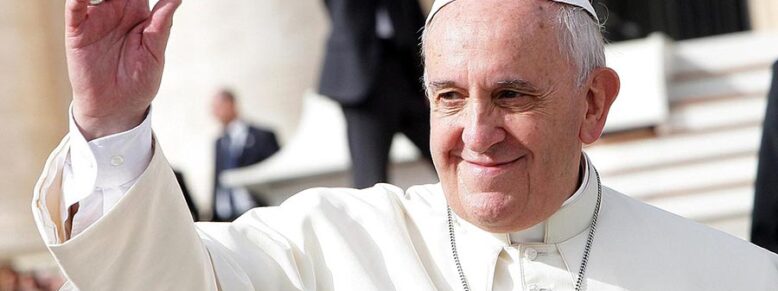
Pope Francis’ social imagination

Pope Francis March 2016

Published in the normally quiet midsummer season, Pope Francis’ recent letter reaches far beyond the originally intended audience. Pitched as a document that examines how reading literature can help develop the maturity of trainee priests, the Pope extends his message to all Christians in the hope that reading will flex our imagination. Here I suggest this letter directly impacts upon a capacity for social imagination within Catholic social teaching.

Read more >>

Law, regulation and economic life – from “how much regulation?” to “who regulates?”

Catholic social teaching has a lot to say about the basic systems of law that should underlie a flourishing business economy. In recent years, Catholic social teaching has also commented on regulation. Although a distinction between law and regulation is not made explicitly in Catholic social teaching, such a distinction is helpful. It would help clear up confusion between the role of government in regulating economic life (where prudential judgement might be applied both in relation to who regulates and how much) and the role of government in providing the basic framework of governance.

Read more >>

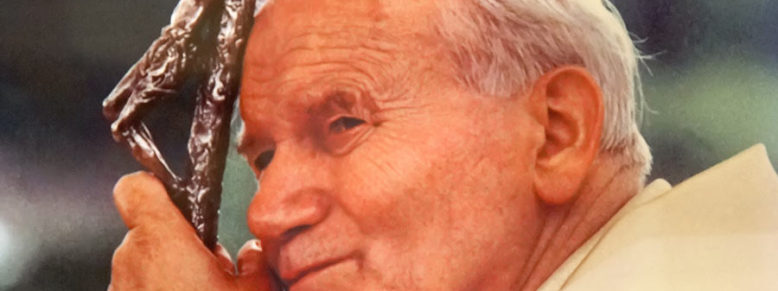
John Paul II: Witness of Hope

Pope_John_Paul_II

Earlier this year, we commemorated the one hundredth anniversary of the birth of Karol Wojtyla, Pope John Paul II. A multitude of articles, conferences and events has marked the date but perhaps the best way to recall John Paul II is through the authorised biography produced by George Weigel titled “Witness to Hope” and first published in 1999.

Read more >>

The late scholastics and globalisation

Salamanca

While the understanding of Catholic social thought as a structured and articulated body of thought is relatively recent, its roots go back much further. The work of St. Thomas Aquinas is certainly pivotal in this regard (and merits its own analysis), but in several matters the first consistent reflection on applied global economic and social issues from a Catholic perspective ought to be credited to the late scholastics and particularly to the so-called School of Salamanca.

Read more >>
Your subscription could not be saved. Please try again.
Your subscription has been successful.

Never miss a post

Subscribe to email list to recieve an automatic email whenever a new post is published.

We use Brevo as our marketing platform. By submitting this form you agree that the personal data you provided will be transferred to Brevo for processing in accordance with Brevo's Privacy Policy.

© Catholic Social Thought 2020