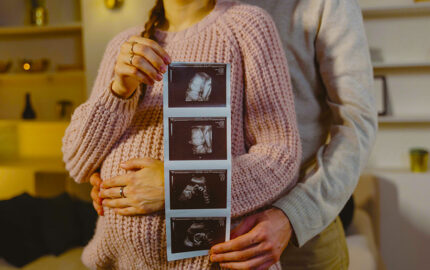
The UK is a country in which you can get abortion pills by post; in which abortion has been decriminalised up to birth in some circumstances; and in which one in three pregnancies ends in an abortion. This is rather shocking.
However, we often say that peace is not the absence of war. Similarly, building a culture of life is not simply about opposing abortion – though it is very important to do that. Bearing that in mind, Day for Life this year focuses on the humanity of the unborn baby.
As the Vatican Secretary of State, Cardinal Parolin, wrote to the bishops when sending Pope Leo’s greetings for day for life:
His Holiness was pleased to learn of the theme chosen for this year, focused on the wonder of the full humanity of the child in the womb, as well as of your efforts to support mothers and fathers who have suffered the loss of an infant. Indeed, as he recently reminded us in the encyclical Magnifica humanitas, from the very moment of conception every human being is endowed with an infinite dignity “simply by virtue of existing, of having been willed, created and loved by God”.
How do we bring society to understand that reality?
Language
One starting point here is language.
Confucius was reported to have said: “when words lose their meaning, people will lose their liberty”. Today, we could re-phrase that and say: “When words lose their meaning, babies lose their lives”.
In passing, it is worth noting that the same applies at the other end of life, in the assisted suicide debate – which supporters euphemistically call “assisted dying”. In Canada, for example, the “The Canadian Association of MAiD Assessors and Providers” (in other words the association of medical professionals who help people end their lives) describe assisted suicide (in other words, a doctor helping somebody kill themselves) as a “treatment option”. This is an extraordinary transformation of the meaning of the word “treatment”.
But we see the same problem when it comes to abortion.
This is from a BBC report of a book which has been placed on the school syllabus in France. The author is describing her illegal abortion before abortion was legalised in France. She stated: “It is a fundamental freedom to be in control of your body and therefore of reproduction”. There are two basic errors here. And they are matters of science, not of theology. Aborting a baby is an act which involves another body. This is a scientific fact. And when the author talks about “reproduction”, reproduction had happened many weeks before her abortion. No respectable scientist believes that reproduction happens after conception.
This article was a collaboration between an organisation connected to the Nobel Prize foundation and the BBC. There was no critique or even any questioning of her position.
Important political institutions use language to influence our culture so that we no longer think of the humanity of the unborn baby. The World Health Organisation (an arm of the UN) strongly promotes pro-abortion policies in the name of “healthcare”. This, for example, is the Word Health Organisation’s main front-page statement on abortion: “Induced abortion is a simple and common health-care procedure”. In our own country, we tie British foreign aid to abortion in recipient countries, describing it as “healthcare” in official documents.
Pope Francis described this as “ideological colonisation” because the peoples of most of the countries that receive foreign aid or assistance from the WHO know that abortion involves the taking of the life of a human being.
How we described an unborn baby in the past
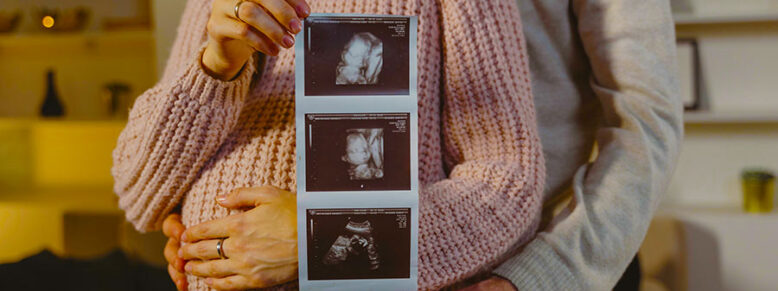
And we all know the reality. From the moment of conception, the unborn baby is clearly a baby. It is developing – a heart, a brain, a nervous system, and little baby feet.
Paradoxically, it seems that the more we learn about the science of the unborn child, the more our language reflects a total fiction.
The 1967 Abortion Act operates within a legal framework that originated 160 years ago. The three Acts of Parliament that sit alongside the Abortion Act were called “The Infant Life Preservation Act”, “The Child Destruction Act” and the “Offences Against the Person Act”.
Is it not extraordinary that, nearly 200 years ago, without the advances in scientific understanding we have now, we called, in legislation, the unborn baby what it is – an “infant life”, a “child” and a “person”? And now we describe abortion as healthcare.
Indeed, our knowledge of the reality of the unborn baby goes much further back.
The word “foetus”, which many people use to describe an unborn baby to downplay his or her humanity, originated in the 14th century and actually means “offspring”. They knew what they were talking about back then.
It is clear from the Gospels that Mary knew she was carrying a baby as soon as He was conceived. It is reported that John the Baptist leapt in his mother Elizabeth’s womb when Mary greeted her.
Further back still In the Psalms, it is stated: “For you formed my inward parts; you knitted me together in my mother’s womb.”
We have always known that an unborn baby is a baby who is not yet born.
Indeed, it was not until the 20th century that we first have persistent calls for abortion as a human right. Perhaps significantly, the first state to make abortion a human right was the Soviet Union. The same Soviet Union that was responsible for the deaths of 67 million people who were actually born.
Culture and language
Our culture is not conducive to life partly because we have allowed language to change. We might say “who can kill an unborn baby?”, but the media would say “who can deny a woman rights over her body?” or “a right to healthcare”.
Very few people think explicitly about the detailed moral implications of every political and moral view they hold. We work on the basis of rules of thumb. We absorb things from our culture. So, if people who support legal abortion are able to change the language we use, they have won more than half the battle.
The language used by pro-abortion campaigners dehumanises the person in the womb in order to turn abortion into a neutral or even a positive action.
Reasons are given to justify abortion based on the dependence of the unborn baby on the mother: but we don’t, in any other setting, allow a life to be ended because it is dependent on another. We allow babies with disabilities to be aborted up to birth in this country: but we would never kill a child even a few hours after birth because it was disabled.
There can only be one reason why we allow this. We have convinced ourselves that the unborn baby is not actually a baby – that it is not a human person. Campaigners for legalised abortion use euphemisms – that is, they use words designed to avoid facing up to a reality that is too painful for them to confront.
Rebuilding culture
How might we rebuild culture by re-affirming the humanity of the unborn child.
Firstly, we can pray for the unborn, including in parish intercessions. There are many occasions in the liturgical calendar when we could do this.
Secondly, we can pray for parents who have experienced miscarriage. Indeed, it was written in the message from Cardinal Parolin: “His Holiness prays that all parents grieving the loss of a child, especially an infant, may find comfort and peace in the knowledge of God’s love for them and for their child.”
Relatedly, can we find other ways to support such parents who know they have suffered a bereavement in a parish or other setting? Certainly, we can encourage them to seek advice on the various Catholic rites and ceremonies that are available for those who have experienced baby loss.
The Day for Life collection which takes place in each parish funds some wonderful causes: charities working to change the law; charities that assist pregnant women in distress; charities that help mothers who have had abortions and are seeking healing. All are building a culture that protects life and promotes the humanity of the unborn child.
By way of conclusion, I will note that culture is an integral part of the common good – that set of undistributable conditions that are necessary for us all to reach fulfilment or perfection. Truth is also an integral part of the common good, as Pope Leo pointed out recently. There is no higher good than life. And nothing is more important than building a culture of life using language that communicates truth. We can do that in more ways than we might have imagined.