Each of our readings today call us to embrace the courageous path, especially in times when we face oppression and persecution. Jeremiah ministered as a prophet for 40 years, at a time when the northern kingdom of Israel had already succumbed to the invasive oppression imposed by the Assyrian empire.
Jeremiah lived to witness the defeat of the Assyrians, a defeat inflicted by the emerging Babylonian empire which went on to conquer the southern kingdom of Judah. The city of Jerusalem would fall, and the temple of Solomon be despoiled. This tragic affliction was depicted as punishment for Hebrew infidelity and idolatry.
Jeremiah confronted all falsehoods and condemned the oppressions imposed by invading empires. He was equally condemnatory regarding the idolatrous behaviour of his fellow Hebrews in both the northern and southern kingdoms.
Jeremiah reserved his most severe condemnation for King Jehoiakin of Judah: “the lord sent me to prophesy against this house and this city. Mend your ways and your deeds …obey the voice of the Lord your God.”
Speaking truth to power will often bring punishment. Jeremiah suffered for the truth he proclaimed. Jeremiah was ultimately forced to abandon his homeland under threat of execution, dying in Egypt when his prophesy was fulfilled with the fall of Jerusalem to the Babylonians.
The psalmist, himself suffering oppression for speaking the truth to his own people, offers a personal lament for the loss of any opportunity to offer sacrifice in the temple. When we feel the onslaught of oppression we should invoke the words of the psalmist: “rescue me from the mire, lest I begin to sink. From those who hate me, deliver me, and from the waters deep, lest the waves overwhelm me. Let not the deep engulf me, nor the pit close its mouth on me.”
In Matthew’s gospel we witness the death of John the Baptist, martyred for speaking truth to power.
Herod the Tetrarch, Herod Antipas, was the son of Herod the Great. He had been married to the daughter of the king of the Nabateans but had abandoned her to marry Herodias, who was herself the grand niece of Herod the Great.
Herodias had been married to Herod’s own brother, Philip, who had abandoned the Holy Land to embrace a lavish private lifestyle in Rome.
Herod the Tetrarch and Herodias, both intoxicated with lust and ambition, abandoned their living spouses and united themselves to each other in adultery and incest.
John the Baptist had firmly confronted this immoral abomination and would pay the ultimate price. The mother, Herodias, prompted the daughter, Salome, to ensnare her own husband by seduction: “give me the head of John the Baptist here on a platter.”
Speaking truth to power has a cost.
We are gathered at the Catholic national shrine and basilica of Our Lady in Walsingham to offer spiritual reparation for the atrocities perpetrated in direct contravention of the gospel of life, here in our own country and across the world.
We are gathered on the memoria of St. Alphonsus Liguori, patron of all confessors and moral theologians.
Born in Naples in 1696, we honour him as founder of the congregation of The Most Holy Redeemer, the Redemptorists, the congregation being established in 1732.
In 1762, under obedience to the then Holy Father, Pope Clement XIII, Alphonsus reluctantly become a bishop. All bishops will understand the disposition of Alphonsus.
Alphonsus teaches us much about confronting the evil of sin in all its forms. Whilst being ever clear and strict in his moral teaching, Alphonsus always advocated simplicity, gentleness and intelligibility in both preaching and in the delivery of spiritual and pastoral direction.
A study of his life, which included many sufferings, will bring us much enlightenment and encouragement. We will do well to invoke his powerful intercession as we re-commit ourselves to the great work of defending the sanctity of human life from the moment of natural conception to the moment of natural death.
As we undertake once more this pilgrimage of reparation and prayer for the sanctity of life, let us conclude by drawing strength from the wisdom of papal teaching.
On the feast of the Annunciation in 1995, Pope St. John Paul II promulgated his great encyclical letter ‘Evangelium Vitae’ on the gospel of life.
St. John Paul II powerfully connects the natural to the supernatural when he declares that “man is called to a fullness of life which far exceeds the dimension of his earthly existence, because it consists in sharing the very life of God. The loftiness of this supernatural vocation reveals the greatness and the inestimable value of human life even in its temporal phase.”
He goes on to state that “life in time, in fact, is the fundamental condition, the initial stage and an integral part of the entire unified process of existence. It is a process which, unexpectedly and undeservedly, is enlightened by the promise and renewed by the gift of divine life which will reach its full realization in eternity…life on earth is not an ‘ultimate’ but a ‘penultimate’ reality, but (nonetheless) life on earth remains a ‘sacred reality’.”
Another powerful phrase from ‘Evangelium Vitae’ is so pertinent for our age in which society is resistant to the construction of a logical and properly integrated set of moral principles: “the gospel of God’s love for man, the gospel of the dignity of the person and the gospel of life are a single and indivisible gospel.”
I take one final quotation from St. John Paul II when he addresses the entire world, every individual, every conscience: “the gospel of life is not for believers alone: it is for everyone. The issue of life and its defence and promotion is not a concern for Christians alone. Although faith provides special light and strength, this question arises in every human conscience which seeks the truth and which cares for the future of humanity. Life certainly has a sacred and religious value, but in no way is that value a concern only of believers. The value at stake is one which every human being can grasp by the light of reason; thus it necessarily concerns everyone.”
The Church and the entire world was blessed on the 15th May this year when our Holy Father, Pope Leo XIV, published his first encyclical letter ‘Magnifica Humanitas’ – humanity, created by God in all its grandeur. Although its main thrust concerns the safeguarding of the human person in the context of the dangers presented by the indiscriminate application of artificial intelligence, the text presents a magnificent teaching that is entirely applicable to the arena of defending the value and sanctity of human life itself.
The holy father challenges us all contemplate the fundamental choice that faces humanity at this pivotal moment in our history.
Will we build a ‘tower of babel’, whereby we abandon ourselves to selfish chaos and indulgent disintegration? This choice emerges from the great shadow inflicted by an atheistic despair and by the debilitating limitations of pure materialism.
The great alternative is that we embrace our true nature, embrace the magnificence of our shared responsibilities by participating in the work of building the great city in which God and humanity dwell together.
Pope Leo XIV references the clear and insightful philosophy of Pope St. John Paul II when he speaks of “the ontological dignity of existence- infinite, unconditional, a dignity that cannot be erased in any circumstance.”
The Holy Father proclaims that “every human person is planned and willed by god to enter into communion with him, with others and with creation.”
Divine providence is the cradle of every life.
Pope Leo also echoes a great theme that was coined by Pope St. Paul VI – the civilisation of love: “the civilisation of love will not arise from a single or spectacular gesture, but from the sum total of small and steadfast acts of fidelity that serve as a bulwark against dehumanisation.”
Let us be eager and courageous in playing our part in this great work, for the contribution of each one of us is crucial.
Let us speak truth to power, to those who occupy the halls of earthly power and influence.
Let us also speak truth to our brothers and sisters nearer to home. Never let it be said that we speak with arrogance. Ever let it be said that we speak with humility: humility born of eternal truth.
Let us invoke the powerful intercession of Our Lady of Walsingham her in England’s Nazareth.
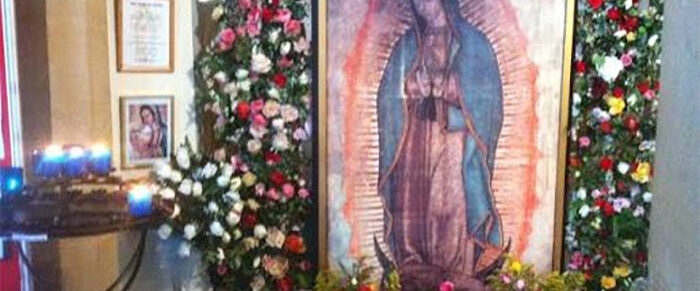
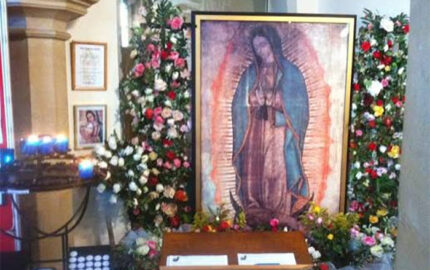
Let us invoke the powerful intercession of Our Lady of Guadalupe, universal patron of life.
In ‘Magnifica Humanitas’ Pope Leo beautifully describes the blessed virgin Mary as “the poet and prophetess of redemption.”
Let us proclaim the prophetic poetry of redemption and speak courageously of the glorious value, of the magnificent dignity and of the eternal sanctity of human life.