
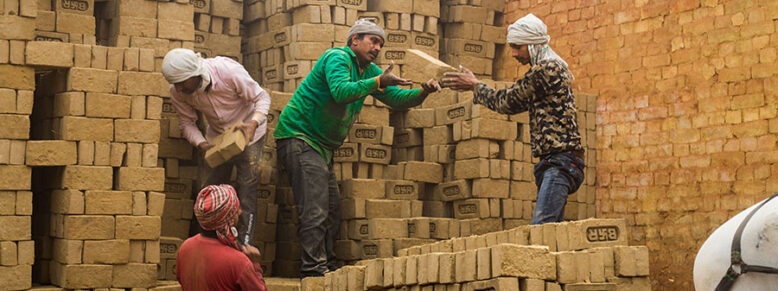
Of Babel, the rabbinic tradition in Pirqei de Rabbi Eliezer says that, when a brick fell from the tower, the builders wept because a brick was costly and slow to replace; but when a worker fell, no one wept.
The encyclical gives that sin its economic name: the “idolatry of profit that sacrifices the weak” (§10). Babel is condemned not for building, but for what it is willing to spend in order to build. And what it spends is people.
The encyclical brackets Jerusalem as the rebuilding of the walls (Neh 2–6) and draws its images from that span: the families convened, each assigned its own section, the wall rising through the shared responsibility of all (§8). Subsidiarity and solidarity in practice, and a common good in the most literal sense.
But at the exact centre of that bracket sits the chapter the encyclical passes over, and it is the chapter without which the wall never rises. In Nehemiah 5 the work stops. A great outcry goes up: to buy grain in the famine and to pay the Persian king’s tax, the people are mortgaging their fields, their vineyards, and their houses, and selling their own sons and daughters into debt bondage. And the creditors are not Sanballat and the enemies watching from outside the wall; they are the nobles and officials, the people’s own wealthy brothers, lending at “the hundredth”, roughly one percent a month, and taking land and children as collateral: usury in its exact sense, gain harvested from a brother’s hunger. The men building the wall by day were being foreclosed on by night, and by the same hands.
The real threat to the building project was never the adversary outside; it was extraction inside.
Nehemiah’s response is the hinge of the whole book. He does not tell the builders to work harder; he stops the work, confronts the creditors, and demands restitution that very day: the fields, vineyards, olive groves, and houses returned, and the interest given back (Neh 5:11). He has the priests administer an oath, and he shakes out the fold of his robe as a curse: “so may God shake out of his house and property every man who does not keep this promise” (Neh 5:13).
And then, for twelve years as governor, he refuses the food allowance his office lawfully entitled him to, because the burden on the people was already heavy (Neh 5:14–18): every power of the office, none of its income. The wall rises only after the value is returned.
Magnifica Humanitas insists that technology carries the imprint of whoever builds, finances, and owns it. Babel fell because of what it was willing to sacrifice in order to rise; Jerusalem rose because its builders were its owners and its governor was a steward.
The question artificial intelligence puts to us is still Nehemiah’s: not only what we build, but the stewardship we are prepared to exercise in order to build it
—
Image by: Swastik Arora