In this blog post, I explain the distinction between social and distributive justice in Catholic social teaching, using the parable of the Prodigal Son.
Read more >>Explaining social justice using the Prodigal Son
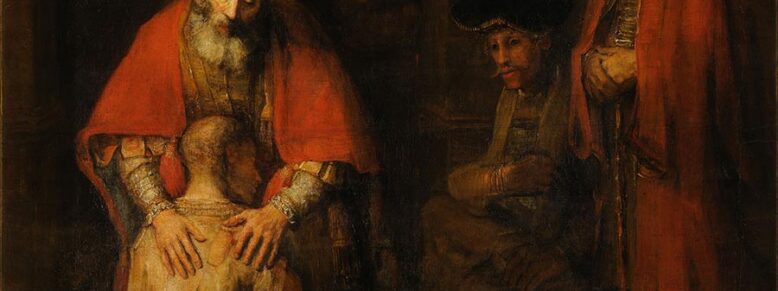


In this blog post, I explain the distinction between social and distributive justice in Catholic social teaching, using the parable of the Prodigal Son.
Read more >>
On the website www.catholicsocialthought.org.uk, there is a set of videos that introduce Catholic social thought and teaching. We continue featuring those videos on the blog with the video on Principles of Catholic Social Thought and Teaching which focuses on the four pillars of human dignity, the common good, solidarity and subsidiarity. These are also available in Portuguese .
Read more >>
I thank you for the opportunity to address you for this lecture in honour of Brother Jack McArdle. I thank you for your pro-life work and the constancy with which you have alerted your members to the dangers of legislation against life in England and Wales, Scotland, Ireland and the other islands of Jersey and the Isle of Man. I thank you for your prayers and actions in contacting MPs and Peers and highlighting concerns of the developing legislation.
Read more >>
Confucius was reported to have said: “when words lose their meaning, people will lose their liberty”. Today, we could re-phrase that and say: “When words lose their meaning, the most vulnerable will lose their lives”.
Read more >>
In this final part of the encyclical, the treatment and protection of the working class is dealt with directly and at length.
Read more >>
To know whether compassion is under threat, we need, firstly, to define it. In the Christian tradition, compassion means to “suffer together with”. It involves entering into the suffering of another. There are classic Christian examples of compassion. Mary shared her son’s agony at the foot of the cross. The Good Samaritan provided the financial means and put himself at considerable physical risk to help the person who had been robbed. St Maximillian Kolbe substituted himself for a condemned father in Auschwitz and, as a result, was condemned to starvation himself, though he actually suffered death from the injection of carbolic acid into his veins.
Read more >>
We ended Part One of this guide to Rerum novarum with the encyclical’s reminder to the rich that they would have to answer to God if they were not generous with their riches. The focus of that first part was the staunch defence of the right to property. This part will look at the relationship between the state, the family and the Church and the responsibilities we have to the poor.
Read more >>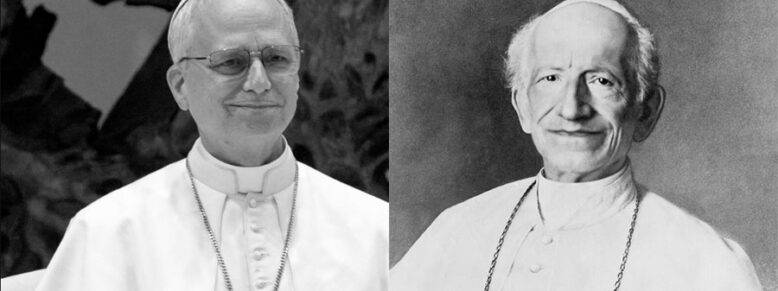
Upon his election, Pope Leo XIV said that he was inspired to take the name “Leo” by Pope Leo XIII’s work on Catholic social teaching. The newly-elected pope especially mentioned Pope Leo XIII’s encyclical, Rerum novarum. Pope Leo XIV related this to the current need to think about things afresh given the development of artificial intelligence (AI). This series of three blogs explores Rerum novarum. It is a radical and holistic call to orientate our whole lives towards God – including in the political, economic and social sectors. To try to distil it for its proposals, as many do, in the political, economic and social domains alone and to take it outside its religious context leaves it stripped of its essence.
Read more >>
In this blog post, first posted on the Centre for Enterprise, Markets and Ethics blog, Neil Jordan discusses the risks of de-humanisation from the use of AI in HR processes
Read more >>
The idea that government should be based on Christian principles is continually under attack – not least on several occasions in the assisted suicide debate. Not only is that proposed law itself incompatible with Christian principles, but many of those proposing it have suggested that Christians should not be involved in the debate or that Christian principles should not determine our views on the issue.
Read more >>