The Season of Creation – (Faith) responses to (rapid) climate change

rapid climate chnage

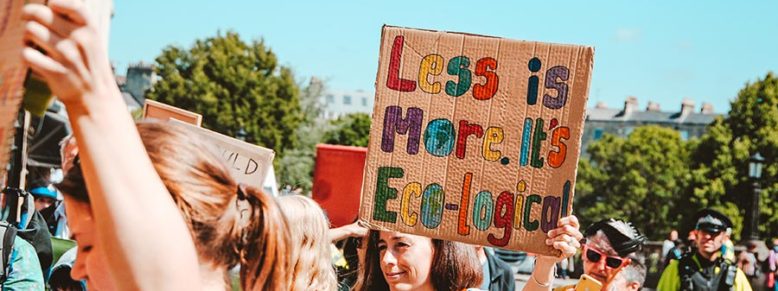
There are clear signs e.g. herehere and here that rapid climate change is no longer a possibility that can be dismissed. Indeed, if the analogy of a boiling kettle being a tipping point that is preceded by fizzing as an indicator that the water is about to boil is relevant, current indications might mean that rapid and even runaway climate change is upon us.

Read more >>

The Call of Creation

October 4th was the feast of St Francis of Assisi, the patron saint of ecologists and animals. The day brought to an end the season the Catholic Church describes as “The Season of Creation”. The Bishops’ Conference of England and Wales also chose that day to launch a considerably revised, new edition of its teaching document on the environment – The Call of Creation.

Read more >>

Property and human dignity – the prophetic message of Pope Leo XIII

There is a temptation to play down those aspects of Rerum novarum which related to private property. This encyclical was really about labour, it is argued. Or it is suggested that the right to property is only a secondary right subject to the universal destination of goods and therefore not important. Still others say it was an encyclical that, in this respect, reflected its time – a period when the Church’s property was under attack from extreme socialists.

Read more >>

Elinor Ostrom and Catholic social thought

Elinor Ostrom

In this post, Philip Booth discusses how the language we use in debates can get in the way of agreement and how Catholics interested in environmental issues should study the work of Elinor Ostrom for inspiration.

In the last blogpost on this site, I wrote about the importance of private property rights for environmental conservation. But there is more to this debate. And sometimes semantics gets in the way of reaching a common understanding on these issues. My garden, for example, is private property and nobody would doubt that. However, a community of monks might care for their (possibly very large) grounds, farm, gardens, bee hives, and so on by holding it in common – though they still hold it privately in common. Indeed, property titles can be quite complex. Under English law, there will sometimes be restrictive covenants, nested leaseholder and freeholder arrangements and property held under trust (including by charities such as the National Trust) and many of these devices will be designed to ensure good outcomes when it comes to sustainability.

Read more >>

Your subscription could not be saved. Please try again.
Your subscription has been successful.

Never miss a post

Subscribe to email list to recieve an automatic email whenever a new post is published.

We use Brevo as our marketing platform. By submitting this form you agree that the personal data you provided will be transferred to Brevo for processing in accordance with Brevo's Privacy Policy.

© Catholic Social Thought 2020