This post by Philip Booth considers freedom of speech, conscience and religion in the context of specific laws in the UK which allow a great deal of administrative discretion in restricting those freedoms.
Read more >>Freedom to speak and to pray


This post by Philip Booth considers freedom of speech, conscience and religion in the context of specific laws in the UK which allow a great deal of administrative discretion in restricting those freedoms.
Read more >>
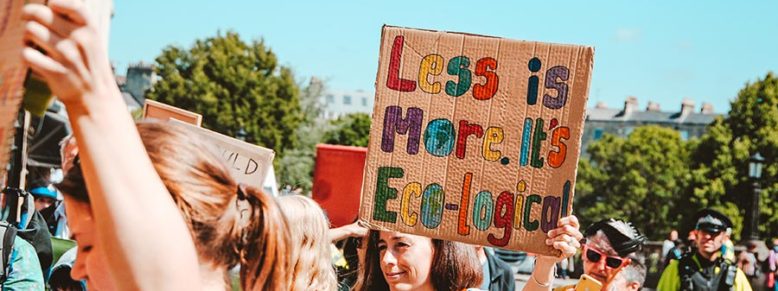
In this post, Philip Booth discusses how the language we use in debates can get in the way of agreement and how Catholics interested in environmental issues should study the work of Elinor Ostrom for inspiration.
In the last blogpost on this site, I wrote about the importance of private property rights for environmental conservation. But there is more to this debate. And sometimes semantics gets in the way of reaching a common understanding on these issues. My garden, for example, is private property and nobody would doubt that. However, a community of monks might care for their (possibly very large) grounds, farm, gardens, bee hives, and so on by holding it in common – though they still hold it privately in common. Indeed, property titles can be quite complex. Under English law, there will sometimes be restrictive covenants, nested leaseholder and freeholder arrangements and property held under trust (including by charities such as the National Trust) and many of these devices will be designed to ensure good outcomes when it comes to sustainability.
Read more >>
In this week’s post, Philip Booth discusses the papal encyclical Laudato Si, responding to Pope Francis’ desire for dialogue on the issues raised.
Bishop Robert Byrne of Hexham and Newcastle described Laudato Si, published five years ago next week, as a “prophetic document that has given a theological and spiritual framework to the environmental crisis facing our world”. An earlier post on this blog developed a similar point.
Read more >>
One lasting legacy of the Covid-19 pandemic and the actions taken to slow its transmission will likely be a renewed understanding of the importance of work, not only as a means to earn one’s livelihood, but also as an essential aspect of man’s humanity and a vital element of the human person.
Read more >>
This article follows the same theme as last week’s article in a rather different context. The virtues of social justice and solidarity demand that we all play our part in ensuring that those who die experience a good death and have the support they need. Catholic organisations are working to ensure this in these difficult times, as are a range of other organisations. However, ultimately, when things return to normal, we know that, though we will learn from the use of technology during this difficult period, we still need human contact.
Read more >>
It seems that England has moved from being a nation of shopkeepers, in Napoleon’s apocryphal phrase, to become a nation of broadcasters. The movement to online presentation and teaching and learning has, of course, taken place worldwide. In this week’s post, Isabel Capeloa Gil, Rector of the Catholic University of Portugal and President of the International Federation of Catholic Universities reflects on this move and the importance of personal relationships in the provision of higher education in a Catholic context.
Read more >>
I read the previous two posts on this blog with great interest, and I welcome this opportunity to bring a theological perspective to bear on some of those discussions. In this piece, I want to discuss a passing comment from Trevor Stammers’ post, in which he acknowledges the necessity of employing utilitarian reasoning when faced with the ethics of triage. This acknowledges situations whereby an ethical philosophy considered woefully problematic in normal circumstances, might be permitted due to the extreme complexity at play.
Read more >>
What has Catholic Social teaching to say about the Covid-19 pandemic? As the Church reflects on both the ethics of healthcare resource allocation and the running of the economy, there is quite a lot for us to say; but here I simply want to look at how the United Kingdom’s international policies, and the attitudes underlying them, have affected the country’s response to the crisis. Some policies have been mistaken because they stem from flawed moral attitudes. We have a duty to question and challenge policies: while we are trying to ‘pull together’ governments and public authorities need to be held to account, particularly if mistakes have cost lives. For Christians this is in the best tradition of the Old Testament prophets.
Read more >>
In an open letter to his parish of St Mark’s, Cambridge weeks before the Government’s “Stay at home” message was issued, Prof of New Testament, Richard Bauckham wrote “During the past week I have had the weird sense of a society preparing for an imminent outbreak of war…The analogy with war came to me last week and I might then have thought it over-dramatic. But now everyone is using it. The difference from the great wars is that the “home front” is now the front.”
Read more >>
It seems slightly strange to be posting on this blog in the middle (or, perhaps, at the beginning) of a global pandemic and national emergency about a subject which is not coronavirus. All intellectual and political discussion seems to have converged on that subject. Nevertheless, for those interested in other news, views and topical discussion based in Catholic social thought, we shall continue this blog on a range of issues, though next week we shall look at some aspects of the corona virus crisis.
Read more >>